2026 schedule publishedLast updated 25 August 2026

M2 DISS · Fall 2026 · 6 ECTS

MLTAFoundation Models and Agentic Systems

Modern machine learning through foundation models—following the full path from generation and evaluation to retrieval, agents, systems, and multimodality.
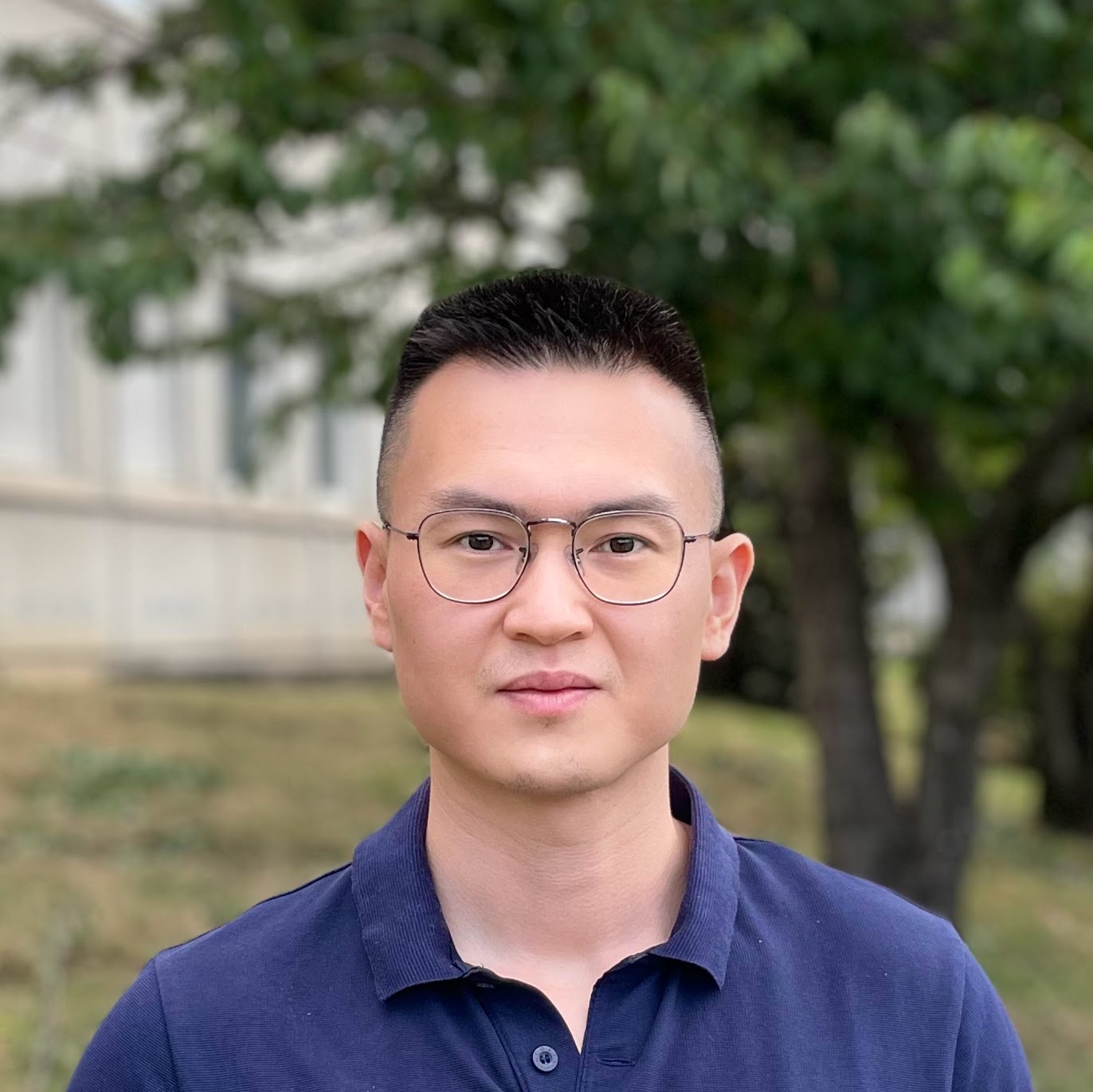
Portrait of Chao Zhang

Instructor

Chao Zhang

Junior Professor Chair in Computer Science

Université Claude Bernard Lyon 1

33focused sessions
36hlectures
24hlabs & project
50/50exam / practical

MLTA is a graduate-level course on modern machine learning with large language models as its principal technical thread.

We move through the complete lifecycle of an LLM system: how text becomes tokens and logits, how models are trained and aligned, how external knowledge is retrieved, how agents plan and act, and how the resulting systems are evaluated and served.

Mechanisms, empirical evidence, controlled comparison, failure analysis, and system trade-offs are central throughout. Products and frameworks appear as case studies rather than ends in themselves.

01

What you will be able to do

Trace a decoder-only Transformer, design reproducible evaluations, build trustworthy RAG and agent systems, and reason about training and serving trade-offs.

02

What this course is not

A general introduction to classical machine learning. Regression, trees, clustering, calculus, probability, and linear algebra are prerequisites or reviewed just in time.

  1. 01

    Sessions 01–05

    Foundations, Prompting & Evaluation

    How do models generate—and how can we compare them reliably?

  2. 02

    Sessions 06–08

    Transformer Architecture

    How does a modern decoder represent and transform a sequence?

  3. 03

    Sessions 09–12

    Pretraining, Alignment & Model Updates

    How are capabilities learned, aligned, and revised?

  4. 04

    Sessions 13–16

    Retrieval & RAG

    How can external knowledge make answers verifiable?

  5. 05

    Sessions 17–24

    Reasoning, Agents & Self-Improvement

    How do models plan, act, recover, and learn safely?

  6. 06

    Sessions 25–29

    Efficient Training & Inference

    How do we make model workloads efficient and dependable?

  7. 07

    Sessions 30–33

    Foundation Models Beyond Text

    How does the paradigm extend to structured and multimodal data?

Lecture · 09:45–13:00 Practical / project · afternoon Examination
Part 1Foundations, Prompting & EvaluationPart 2Transformer ArchitecturePart 3Pretraining, Alignment & Model UpdatesPart 4Retrieval & RAGPart 5Reasoning, Agents & Self-ImprovementPart 6Efficient Training & InferencePart 7Foundation Models Beyond Text
  1. Wednesday · Week 1
    09:45–13:00Nautibus TD001 · Ground floor
    1. 01Generative AI Foundations
    2. 02Tokenization, Embeddings, and Generation
    3. 03Prompt Engineering I: Instructions, Examples, Constraints
    No afternoon block
  2. Wednesday · Week 2
    09:45–13:00Nautibus TD001 · Ground floor
    1. 04Prompt Engineering II: Decomposition and Structure
    2. 05LLM Evaluation Foundations
    3. 06Self-Attention
    No afternoon block
  3. Wednesday · Week 3
    09:45–13:00Nautibus TD005 · Ground floor
    1. 07Transformer and Decoder-Only Language Models
    2. 08Modern LLM Architecture
    3. 09Pretraining, Data, and Scaling Laws
    14:00–17:00Nautibus TD005 · Ground floor

    Lab / project block · activity mapping TBC

  4. Wednesday · Week 4
    09:45–13:00Nautibus TD005 · Ground floor
    1. 10Alignment: SFT and Reinforcement Learning
    2. 11Post-Training and Forgetting
    3. 12Model Editing and Model Merging
    14:00–17:00Nautibus TD005 · Ground floor

    Lab / project block · activity mapping TBC

  5. Wednesday · Week 5
    09:45–13:00Nautibus TD001 · Ground floor
    1. 13Retrieval Foundations
    2. 14Vector Search and Indexing
    3. 15RAG Architectures
    14:00–17:00Nautibus TD001 · Ground floor

    Lab / project block · activity mapping TBC

  6. Wednesday · Week 6
    09:45–13:00Nautibus TD005 · Ground floor
    1. 16Advanced RAG
    2. 17Reasoning, Planning, and Test-Time Scaling
    3. 18AI Agent Fundamentals
    14:00–17:00Nautibus TD005 · Ground floor

    Lab / project block · activity mapping TBC

  7. Wednesday · Week 7
    09:45–13:00Nautibus TD001 · Ground floor
    1. 19Context and Harness Engineering
    2. 20Agent Memory
    3. 21Self-Correction and Verification
    No afternoon block
  8. Wednesday · Week 8
    09:45–13:00Nautibus TD001 · Ground floor
    1. 22Synthetic Experience and Self-Improving Agents
    2. 23Agentic RL
    3. 24Agent Evaluation, Reliability, and Security
    14:00–17:00Nautibus TD001 · Ground floor

    Lab / project block · activity mapping TBC

  9. Wednesday · Week 9
    09:45–13:00Nautibus TD005 · Ground floor
    1. 25Training Systems and PEFT
    2. 26LLM Inference Mechanics
    3. 27Long-Context Inference
    14:00–17:00Nautibus TD005 · Ground floor

    Lab / project block · activity mapping TBC

  10. Wednesday · Week 10
    09:45–13:00Nautibus TD005 · Ground floor
    1. 28Efficient Serving
    2. 29Serving Stack: vLLM, SGLang, and Caching
    3. 30Tabular Foundation Models
    14:00–17:00Nautibus TD005 · Ground floor

    Lab / project block · activity mapping TBC

  11. Wednesday · Week 11
    09:45–13:00Nautibus TD005 · Ground floor
    1. 31Text-to-SQL and Data Agents
    2. 32Graph and Time-Series Foundation Models
    3. 33Annual Frontier
    14:00–17:15Nautibus TD005 · Ground floor

    Lab / project block · activity mapping TBC

  12. Wednesday · Examination
    09:45–13:00Nautibus TD005 · Ground floor

    Written examination
    Coverage and format details to be confirmed.

    End of course
TBC

The dates, times, rooms, and morning session mapping are confirmed from the official timetable. The allocation of the twelve practical activities across the eight afternoon blocks remains to be confirmed.

  1. 01

    TBC

  2. 02

    TBC

  3. 03

    TBC

  4. 04

    TBC

  5. 05

    TBC

  6. 06

    TBC

  7. 07

    TBC

  8. 08

    TBC

  9. 09

    TBC

  10. 10

    TBC

  11. 11

    TBC

  12. 12

    TBC

50%

Written examination

Mechanisms, experiment and system design, trade-offs, failure diagnosis, and interpretation of evidence.

50%

Practical work

Course
Machine Learning Techniques and Applications: Foundation Models and Agentic Systems (MLTA)
Programme
M2 DISS · 6 ECTS
Instructor
Chao Zhang
Department
Département d'Informatique
Université Claude Bernard Lyon 1
Primary venue
Nautibus TD001 / TD005
Ground floor
Contact
chao.zhang@univ-lyon1.fr
Course materials
Available on Moodle – Lyon 1
Prerequisites
Python, machine learning and deep learning foundations, probability, linear algebra, and calculus.